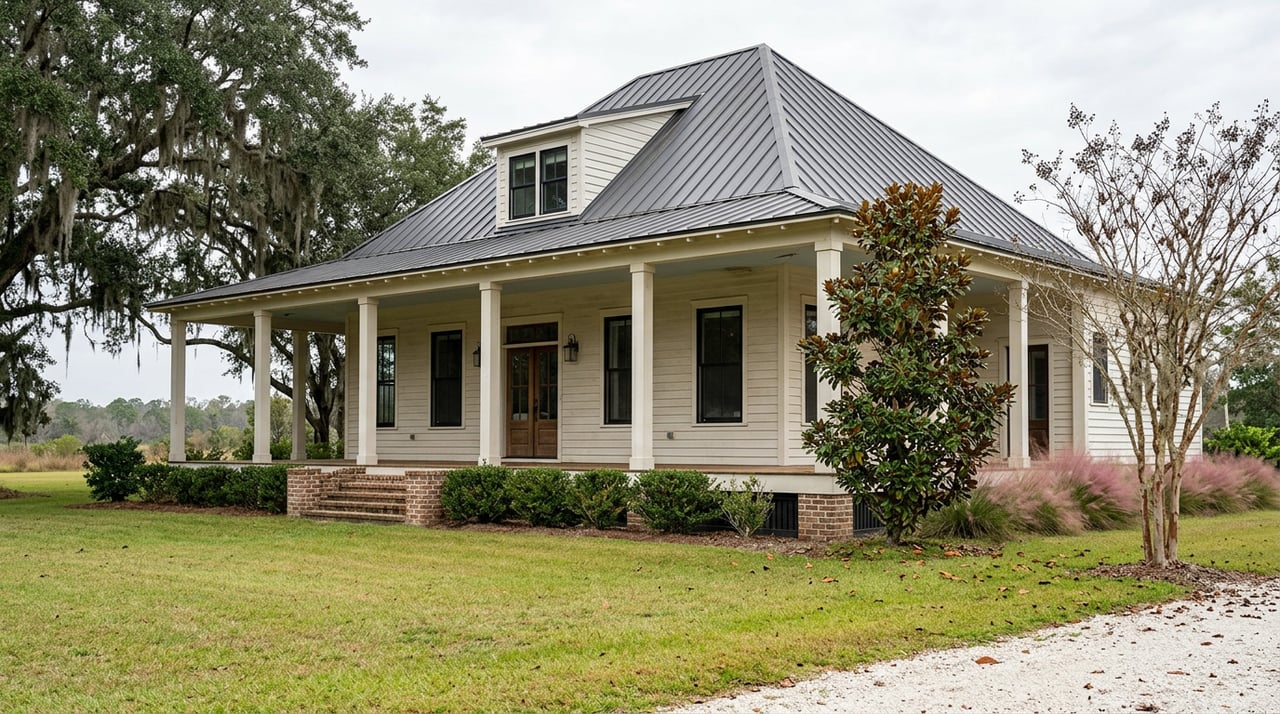
For as long as most people buying acreage near Covington can remember, the septic system got looked at exactly once between owners: the day title changed hands, as St. Tammany Parish's Ordinance Calendar No. 7937 explains. An inspection meant the buyer found out, before closing, whether the tank and field lines under that five-acre lot actually worked.
That link just came apart.
St. Tammany Parish's new sewage ordinance, Ordinance Calendar No. 7937, took effect on January 1, 2026, and it does something the old system never did: it moves septic oversight onto a fixed three-year clock instead of a sale-triggered one. The parish council was explicit about the intent. The certificate program was written to replace the transfer inspections that used to happen at the point of sale, not to run alongside them. If you are shopping for acreage around Covington right now, or getting ready to list it, that change is worth understanding before you write or accept an offer, because the moment you used to count on for a straight answer about the septic system no longer exists in the same form.
Two Rules, One Tank, and a Gap Buyers Don't Expect
St. Tammany actually has two overlapping septic rules on the books, and confusing them is easy.
The older rule, adopted in late 2025 after years of stalled attempts, targets homes south of the parish's urban growth boundary, an east-west line that roughly follows Louisiana Highway 36. NOLA.com reported that homes north of that line are exempt from it. That rule focuses on aerobic treatment units, systems that pump air into the tank and discharge treated effluent into roadside ditches, which is more common on smaller, denser lots.
The new rule, Ordinance 7937, doesn't carve out a geography. It applies to all individual on-site sewage treatment systems parish-wide and issues a certificate of compliance valid for three years. Acreage properties around Covington, which more typically rely on conventional septic tanks with field lines that percolate effluent through the soil rather than discharging it into a ditch, were never the primary target of the older ordinance. That has led some acreage owners to assume they're simply outside the parish's attention. The newer program doesn't offer that exemption.
| Ditch-discharge ordinance (2025) | Parish-wide certificate program (Ord. 7937) | |
|---|---|---|
| Effective | Adopted late 2025 | January 1, 2026 |
| Geography | South of the urban growth boundary only | Parish-wide, no carve-out |
| System type targeted | Aerobic units discharging to ditches | All on-site sewage systems |
| Trigger | Standing inspection zone | Triennial cycle, independent of sale |
| Certificate | None | Valid three years |
Why the Rollout Still Matters if You're Closing This Year
As of the parish's own March 2026 update to its Infrastructure Committee, the program had not yet begun inspecting properties. DES Director Tim Brown told the committee that final pieces, including a tracking software contract and printed materials, were still under legal review. Inspectors have completed Louisiana Department of Health training, and the parish has finalized a tag system that marks each property pass, exempt, inaccessible, or fail. A property that fails gets a 60-day window to correct the problem before enforcement begins.
That rollout timeline matters for anyone transacting in 2026. A three-year cycle spread across a parish this size means most properties simply have not been inspected yet. A seller can hold a perfectly functional septic system and still have no certificate on file, not because anything is wrong, but because the parish hasn't reached that address in the rotation. Under the old rule, a pending sale would have forced the question. Under the new one, it might not.
As NOLA.com reported, Brown said of the program when it was being debated last year, "It's all about water quality." The scale behind that statement is real. St. Tammany has roughly 36,000 individual on-site sewage systems, more than any other parish in the state, and estimates put the share not functioning correctly at around half. A 2024 pilot study looked at 1,000 systems across seven council districts before the council brought the legislation back for a vote, this time with council members Joe Impastato and Jeff Corbin securing the funding that had sunk an earlier 2023 version.
What a Failed System Actually Costs, and Why It Matters More on Acreage
When a system does fail, Brown has put the typical full replacement cost at around $6,000. That number reads as manageable in isolation. It reads differently against acreage economics.
Raw land listed around Covington currently averages roughly $80,000 per acre, and properties that already include a house on acreage average closer to $180,000 per acre, based on current listing data for the area. A $6,000 repair is a small fraction of either number on paper, but it's rarely just the repair. A failed conventional system on a larger lot can mean regrading, new field lines, or an engineered alternative if the soil won't perc the way it used to, and any of those can stall a closing timeline while a buyer's financing commitment sits on the clock. The parish has applied for more than $1 million in HUD grant funding to help offset repair costs for qualifying homeowners, which is worth knowing if you're a seller facing a failed inspection, but that funding has its own application process and isn't something you want to discover you need after you're already under contract.
Lots like those in the Estates at Magnolia Gardens, where parcels run five to nine acres, or the acreage tracts off Highway 25 near Beechwood Gardens, are exactly the kind of large-lot, septic-dependent properties this new certificate program now touches, whether or not they've ever come up in a parish inspection before.
What to Ask For Before You Write an Offer
- Ask the seller directly whether the property has a current certificate of compliance under Ordinance 7937, not just whether the system has ever been inspected.
- Confirm the system type. A conventional tank with field lines and an aerobic treatment unit face different histories under the two overlapping ordinances.
- Ask when, if ever, the property was last inspected, and don't assume a recent sale means a recent inspection. The transfer-triggered inspection this parish relied on for years is being phased out.
- If no certificate exists, ask whether that's because the system hasn't been reached in the parish's rotation yet, which is common right now, or because of something else.
- Budget time as well as money. A 60-day correction window is generous for a homeowner living in the house. It's a different story mid-transaction with a closing date already set.
A Few Questions Worth Answering Plainly
Does the urban growth boundary exemption protect acreage north of Highway 36? It protects those properties from the older, ditch-focused ordinance only. The parish-wide certificate program under Ordinance 7937 doesn't include that same geographic exemption, so a property can be exempt from one rule and still fall under the other.
What happens if an inspection turns up a failing system? The homeowner gets a 60-day window to correct it before the parish moves to enforcement, based on the rollout plan Brown presented to the Infrastructure Committee in March 2026.
Is there help paying for repairs? The parish has pursued more than $1 million in HUD grant funding specifically to offset repair and replacement costs, though eligibility and application details run through the parish rather than through a real estate transaction directly.
Septic status has always been a detail worth checking on acreage. What's changed is that the checking no longer happens automatically. If you're buying or selling a large lot near Covington this year, that's a conversation worth having early, not during option period.
If you're weighing acreage near Covington, or you're on the other side and getting ready to list, Gina Constantino can walk through what a specific property's septic history actually looks like before you're locked into a timeline. Let's Connect.
This article is general information, not legal, tax or financial advice. Consult a qualified professional about your situation.