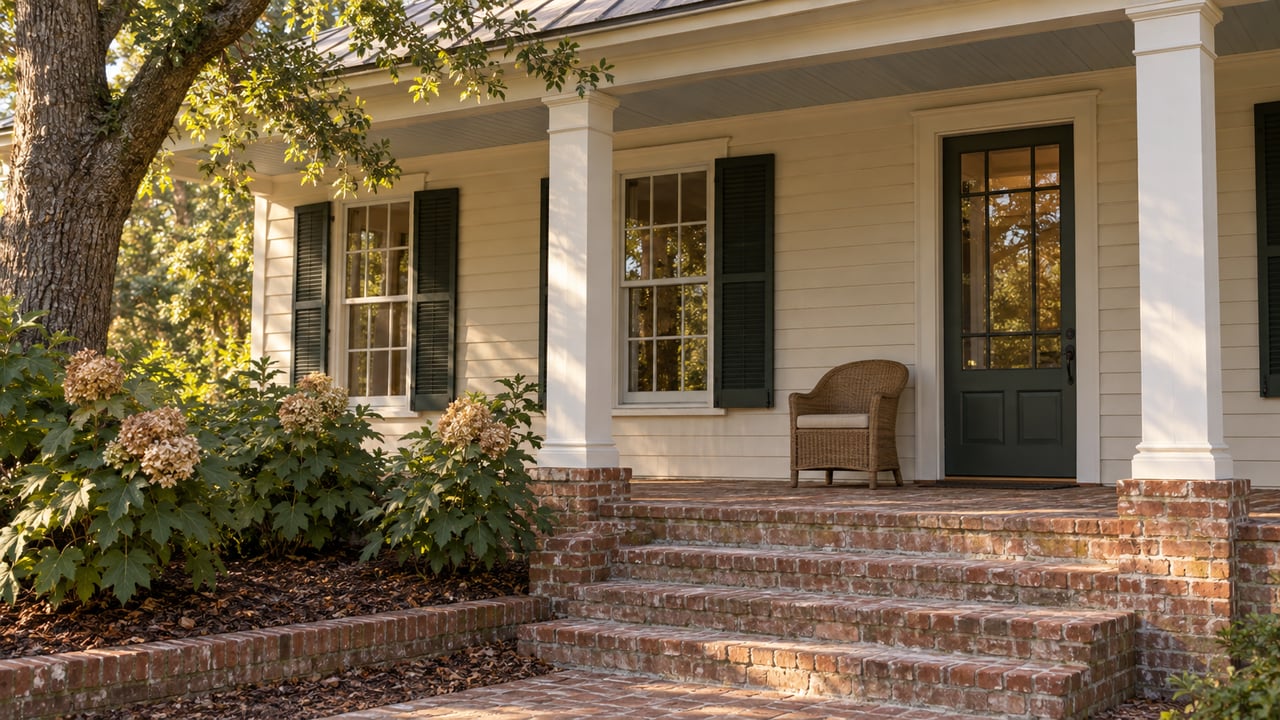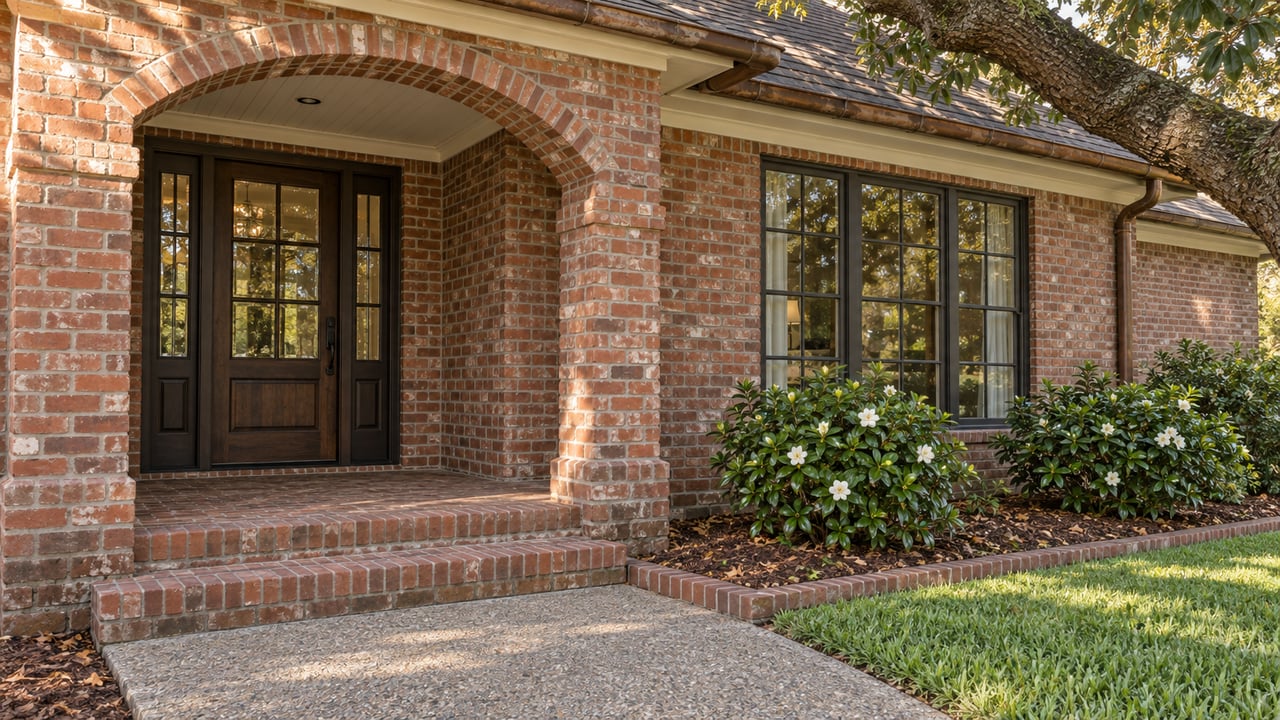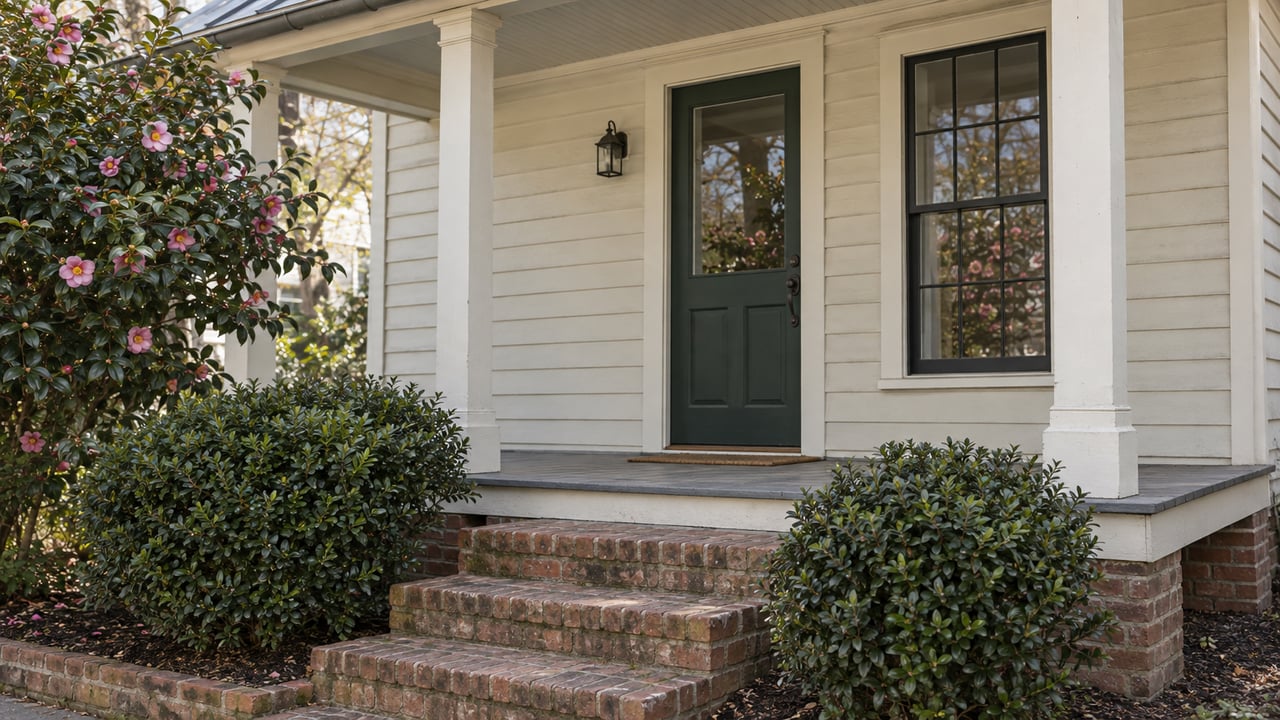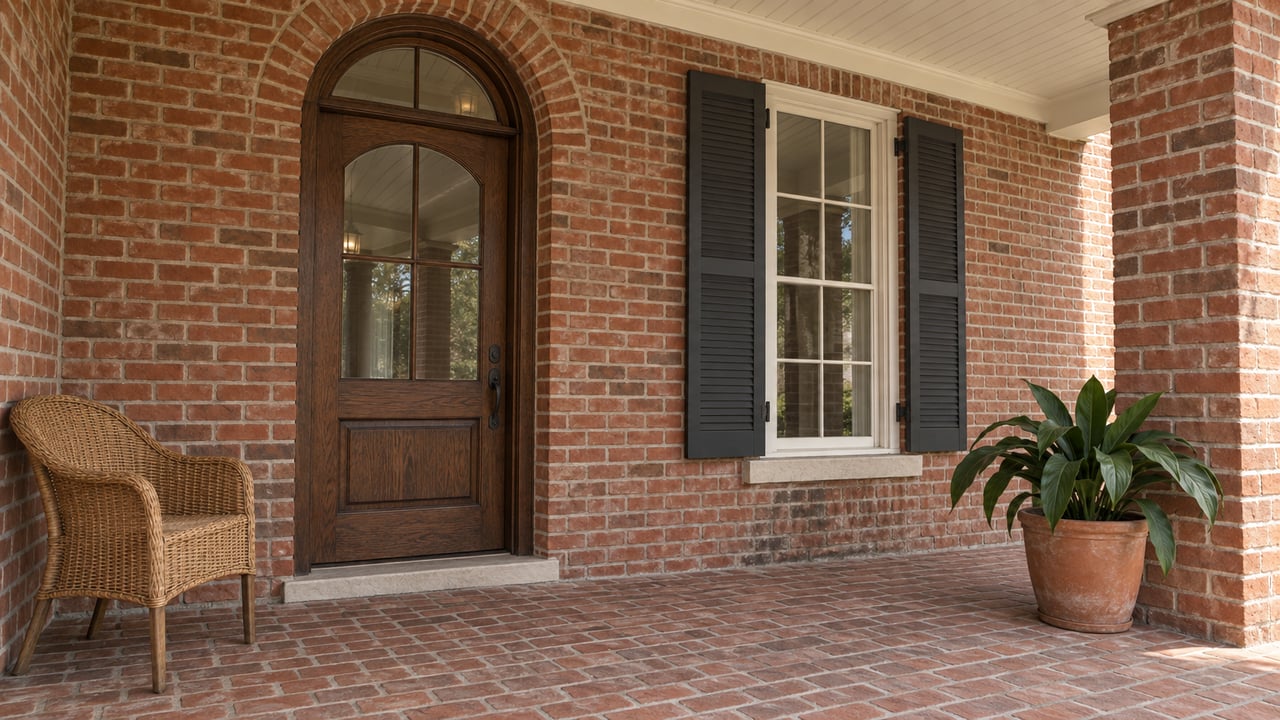
A "Covington, LA" mailing address doesn't settle which tax district a home is in. A home inside the incorporated City of Covington pays a city levy of 19.49 mills for tax year 2025. A 2025 Assessor record for a Palm Plaza parcel with a Covington 70435 address shows zero city mills. The extra city line makes the home inside city limits look like the more expensive one to own. For a large share of homes, the St. Tammany Assessor's own tables say the opposite.
In the Assessor's 2025 millage rates by tax district, district 6, labeled "3 - Covington," totals 105.25 mills with municipal millage included. District 7, labeled "3 - Rural" for Ward 3, totals 112.21 mills. The district that pays the city tax has the lower overall rate. A Louisiana constitutional rule about the homestead exemption then changes that result again, at a home value a buyer can actually calculate.
Where the 7 Mills Come From
The city's 19.49 mills break into three pieces in tax year 2025: 6.56 for general alimony, 9.43 for fire protection and 3.50 for sewers. Outside the city, fire protection still has to be paid for, and it costs more. The Assessor lists Fire Protection District No. 12 as the district serving "Unincorporated Covington." District 12 levies three voter-approved taxes of 5, 10 and 10 mills, which add up to 25.
Both districts start from the same 84.32-mill parishwide base. That base covers law enforcement, public schools, the library, drainage maintenance, the Assessor and several smaller items. They split on the layers added on top.
| 2025 millage layer | District 6, City of Covington | District 7, Ward 3 Rural |
|---|---|---|
| Parishwide base | 84.32 | 84.32 |
| Parish alimony | 1.44 (city rate) | 2.89 (rural rate) |
| Fire protection | 9.43, inside the city levy | 25.00, Fire District 12 |
| City general alimony and sewer | 10.06 | none |
| Total | 105.25 | 112.21 |
A rural-area owner pays about 15.6 more mills for fire protection than a city owner does. That is more than the general alimony and sewer mills that only city owners pay. On a straight rate comparison, the city comes out roughly 7 mills cheaper.
The Exemption That Stops at the City Line
Louisiana's homestead exemption takes $7,500 of assessed value off an owner-occupied primary residence for state, parish and special taxes. Residential land and improvements in Louisiana are assessed at 10% of market value, so the exemption covers the first $75,000 of a home's value. Article VII, Section 20 of the Louisiana Constitution sets a limit on it:
"This exemption shall not extend to municipal taxes."
The exceptions cover Orleans Parish and municipal taxes levied for school purposes. Covington's 19.49 mills fall under neither. A homesteaded house inside the city therefore pays parish and other non-city mills only on value above the exemption, while the city's mills apply to the full assessed value. A homesteaded house in district 7 has all 112.21 mills applied only above the exemption, including the 25 Fire District 12 mills.
That one rule decides which address has the smaller bill. To compare two homesteaded homes:
- Multiply the home's market value as set by the Assessor by 10% to get assessed value.
- Subtract $7,500 for the homestead exemption.
- Inside the city, multiply the remainder by 85.76 mills, which is the 105.25 total minus the city's 19.49.
- Inside the city, multiply the full assessed value from step 1 by 19.49 mills and add it to step 3.
- In district 7, multiply the remainder from step 2 by 112.21 mills.
A mill is one-tenth of 1%, so 85.76 mills on $10,000 of assessed value comes to $857.60.
What the Math Shows at Different Values
Here is that calculation at 2025 rates for the two base districts. These are illustrations, not bill estimates for any specific parcel.
| Market value | City, homestead | District 7, homestead | City, no homestead | District 7, no homestead |
|---|---|---|---|---|
| $200,000 | $1,461.80 | $1,402.63 | $2,105.00 | $2,244.20 |
| $285,000 | $2,356.43 | $2,356.41 | $2,999.63 | $3,197.99 |
| $400,000 | $3,566.80 | $3,646.83 | $4,210.00 | $4,488.40 |
| $600,000 | $5,671.80 | $5,891.03 | $6,315.00 | $6,732.60 |
With a homestead exemption, the two districts cost about the same at a value of roughly $285,000. Below that, the rural district comes out slightly cheaper because the exemption shields more of the bill there. Above it, the city's lower total rate wins, and the gap grows with the home's value: about $80 a year at $400,000 and about $219 at $600,000.
Without a homestead exemption, the city is cheaper at every value in the table. That covers an investor's rental, a second home, or a house bought by someone whose primary residence is still somewhere else. At $400,000 the difference is about $278 a year.
For a first-time buyer near the lower end of the range, the city line hardly matters, and it slightly favors the unincorporated home. A move-up or luxury buyer, an investor, or a relocating household planning to rent before moving in sees the gap point the other way.
The Rural Figure Has Asterisks
The 112.21-mill figure is a baseline, and the Assessor says it is not a ceiling. The Assessor's own label says district 7 excludes tax codes 45, 109 and 115. Several other layers can apply to a parcel with a Covington address outside the city:
- Recreation District 1 applies to part of tax district 07 at 6.75 mills in 2025. Adding it puts that part of the rural area well above the city total, which strengthens the city's advantage.
- Ward 3 water and sewer districts are separate tax districts. District 33 "Rural Water District" and district 38 "Water and Sewer District" each total 115.12 mills.
- Per-parcel fees for drainage, lighting and some road lighting districts are charged in dollars instead of mills, so they never show up in a millage comparison.
Each of these moves the break-even, and most move it in the city's favor. The table above uses the narrowest possible gap.
What the Tax Line Buys on Each Side
The jurisdiction also decides who provides services. Covington is about 8.23 square miles, and the city supplies water, sewer and garbage service inside its limits. Coastal Environmental Services runs the City of Covington residential route, with garbage on Wednesday, recycling on Thursday, and bulky and green waste every other week on separate east and west schedules. It lists St. Tammany Parish Garbage District 1 as a separate service area.
Outside the city, St. Tammany Parish Government notes that in unincorporated areas and older neighborhoods, homeowners operate and maintain their own individual treatment units and septic systems. That upkeep is a cost the millage table doesn't show. Building and land use change hands at the line too. The Parish's Unified Development Code governs unincorporated property, and the Parish runs its own Permits and Inspections Department. Inside the city, the Planning Department handles zoning, subdivision and annexation. The City Building Permit Department has charged $75 per inspection since February 18, 2026.
The line also moves. The city annexed a parcel identified as Parcel B by ordinance on March 11, 2025. On December 9, 2025, it adopted an ordinance bringing tracts B-1-A, B-1-B and B-1-C in Swett Family Subdivision into city limits. Neither ordinance drew a written objection. A parcel's tax district can change even when its ZIP code doesn't.
Where 2026 Stands as of October
The city's side is set. Ordinance 2026-14, passed June 2, 2026, keeps the levy at 6.56, 9.43 and 3.50 mills for a total of 19.49, the same as 2025. The 9.43-mill fire tax runs from 2024 through 2033 after voters renewed it 1,168 to 377 on December 10, 2022. One bookkeeping detail is still open. The Louisiana Legislative Auditor's 2026 report lists the old 3.50-mill sewer code as expired in 2025 and shows a 3.50-mill "Capital Improvements" levy running from 2023 to 2042, tied to that same 2022 election. The rate is the same under either label.
Fire District 12's three levies show no change in the 2026 Auditor report. They run to 2035, 2043 and 2037. The Assessor says full 2026 rates will be published this fall after board and Legislative Auditor approval. The St. Tammany Parish Sheriff's Office says its tax bills are expected in November and due by December 31; interest of 1% a month starts after that.
For any Covington-address home under contract, look up the parcel's tax district on the St. Tammany Assessor's site. Run the five steps above with that district's total and the parcel's own codes, and confirm the result with the Assessor or a tax professional before relying on it.
When a Covington home looks right but the tax district is unclear, Gina Constantino can pull the parcel record, check whether a homestead exemption applies to you, and lay out what the city line means for your bill before you write the offer. Let's Connect.
This article is general information, not legal, tax or financial advice. Consult a qualified professional about your situation.