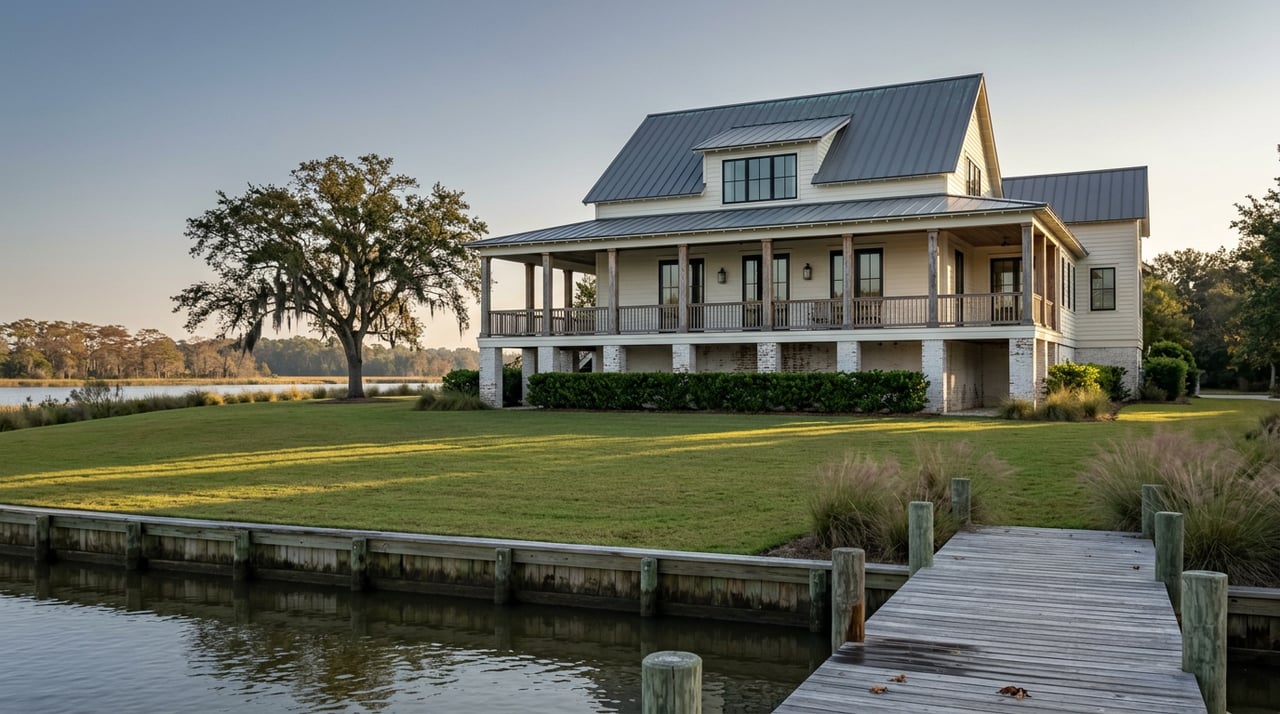
A buyer touring a Tchefuncte riverfront listing in Madisonville tends to picture one thing on the walk to the water: their own dock, their own boat, ready by the first warm weekend. A dock or boathouse still requires sign-off from three authorities, as Lamulle explains, and if the house sits inside Madisonville's historic district, a fourth layer of review sits on top of the other three.
This is the gap that catches buyers who assume waterfront ownership works the way it looks. It doesn't, and understanding why matters more before you write an offer than after you own the lot.
What the Deed Actually Transfers
Building something permanent out into the water, such as a dock, a bulkhead, or a boathouse, still requires permission from bodies that have no relationship to the sale.
That distinction rarely shows up on a listing sheet. It shows up during due diligence, and by then a buyer who assumed dock rights were included has already made an offer based on a plan the permitting process hasn't approved yet.
Three Agencies, One Dock
Marine construction along the Tchefuncte runs through a stack of approvals rather than a single permit. A private residential dock on this stretch of river typically needs sign-off at three levels: the local town or parish, Louisiana's coastal-use program, and the U.S. Army Corps of Engineers. Each layer checks something different, and skipping one doesn't make the project legal, it just makes it unpermitted.
| Layer | What It Reviews |
|---|---|
| Town / St. Tammany Parish | Local zoning, setbacks, and construction standards |
| Louisiana coastal-use program | Coastal zone impact, cumulative effects on the waterway |
| U.S. Army Corps of Engineers | Navigability, federal waters jurisdiction |
According to Lamulle, local marine contractors working this stretch of the Tchefuncte generally quote 60 to 120 days from application to approval for a straightforward residential dock. That window matters for timing. A buyer who closes in March and wants a boat in the water by June is planning around a permit process that may not finish that fast, even when nothing about the request is unusual.
Old Town Adds a Fourth Layer
Madisonville's historic district sits close to the river, which means a meaningful share of the town's waterfront and near-waterfront housing stock falls inside a boundary with its own rules. The town requires a Certificate of Appropriateness before most exterior work on a property inside the historic district, a separate review from anything the parish, the state, or the Army Corps requires for the water side of the same project. The city publishes its Historic District Guidelines, the enabling ordinance, and a comprehensive permit guide through its community development page, and that page is worth a look before assuming a renovation timeline.
This matters for waterfront buyers specifically because a downtown historic lot with river frontage can trigger both processes at once. A new boathouse roofline, a rebuilt pier, even a visible dock addition on a historic parcel may need Certificate of Appropriateness review in addition to the marine permitting chain already described. Multiple agencies checking different things, on different clocks, for one project.
The Public Wharf Isn't a Private Dock
Downtown Madisonville has its own wharf along the river, and the town regulates it separately from private waterfront lots. Madisonville's municipal code defines a specific "Tchefuncte River Wharfage Area" along the west bank, extending a set distance from the dock into the water, and lays out registration rules for anyone who wants to moor there overnight. A vessel can register for a total of three consecutive days, the registration sticker must be visible from the dock, and it expires two days after issuance. Vessels can't be moored longer than 24 hours at town-owned wharves without a special council permit, and re-registration isn't allowed for 72 hours after the initial period ends. You can read the ordinance text through Municode.
That distinction matters for a buyer weighing a downtown lot without private river frontage against a riverfront lot outside the historic core. The public wharf works for a weekend visit. It was never designed to substitute for a private dock, and the registration limits make that clear in the ordinance itself.
What to Verify Before You Write the Offer
A few checks before an offer save weeks of surprise later, particularly on any lot where the seller mentions an existing dock, boathouse, or bulkhead as part of the appeal.
- Ask the seller for copies of permits and approvals covering any existing dock, bulkhead, or boathouse on the property
- Check for open code violations or unpermitted work tied to the parcel through the parish and the town
- Order a title search that specifically looks for riparian or marina easements, and any recorded covenants limiting dock size or construction
- If the property sits in a platted subdivision along the river, review the HOA documents separately, since some carry their own dock rules on top of the public permitting stack
- Request a marine inspection distinct from the standard home inspection, covering pilings, decking, wiring, and mooring capacity
- Talk to a local marine contractor about realistic permitting timelines before assuming a boat will be in the water by a specific season
An older dock on a property doesn't confirm it was built correctly or permitted at all. Docks built decades ago sometimes predate the current three-agency structure, and additions made since then aren't always separately approved. The paperwork question is worth asking before closing, not after the first repair estimate arrives.
A Few Questions Worth Answering First
Does buying a waterfront lot automatically give me the right to build a dock? No. Building a structure out into the water still needs approval from the town or parish, the state's coastal program, and the Army Corps of Engineers.
If my lot isn't inside the historic district, do I skip the extra review? Yes. The Certificate of Appropriateness requirement only applies inside Madisonville's designated historic boundary. A private riverfront lot outside that district still runs through the parish, state, and federal permitting chain for the dock itself, but not the town's separate design review.
Can I just tie up at the downtown public wharf instead of building my own dock? Only within limits. The town's wharfage rules cap overnight mooring registration at three consecutive days with a visible sticker requirement, which works for a weekend on the water but isn't a substitute for permanent dock access if daily boat use is part of why you're buying on the river.
A waterfront purchase on the Tchefuncte works out best when the permitting questions get asked during due diligence rather than discovered during the first renovation. Coordinating a title search, a marine inspection, and the right conversations with the town and the parish before you're under contract is exactly the kind of groundwork that keeps a closing on schedule instead of stalled.
If you're looking at a riverfront or Old Town property in Madisonville and want to understand what a specific lot actually allows before you write an offer, Gina Constantino has spent years coordinating exactly these details for Northshore waterfront buyers. Let's Connect.
This article is general information, not legal, tax or financial advice. Consult a qualified professional about your situation.