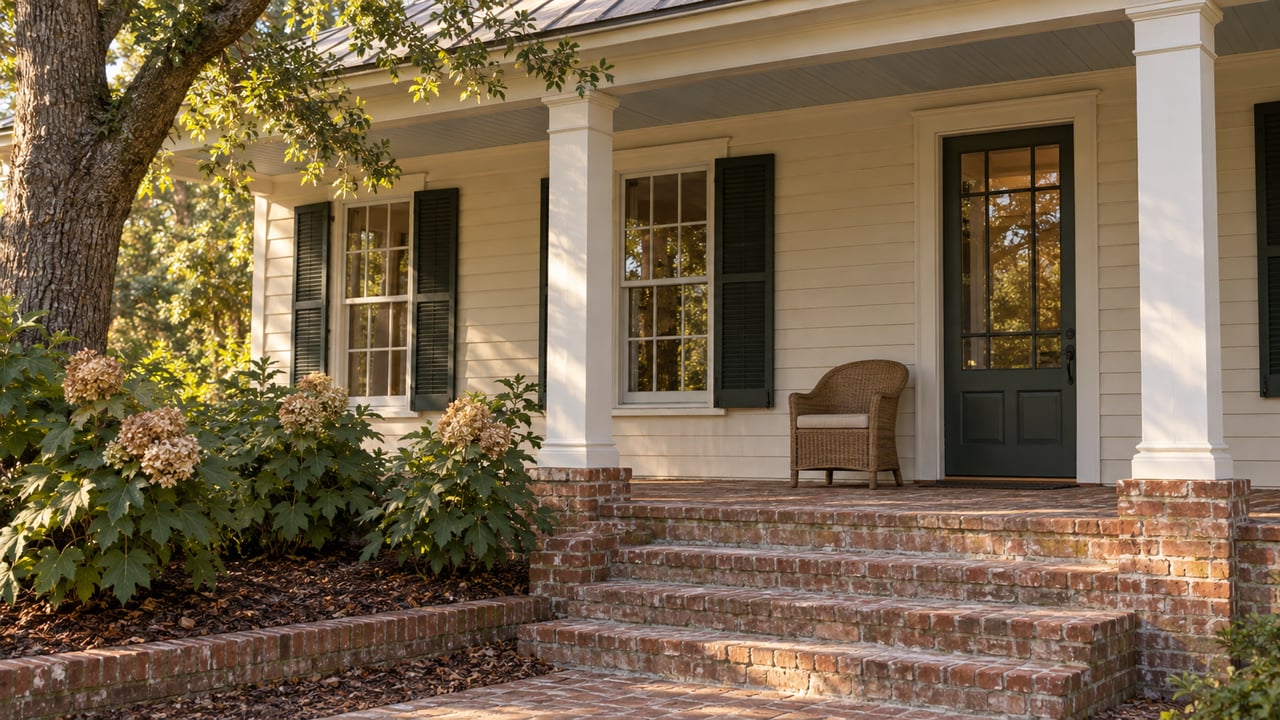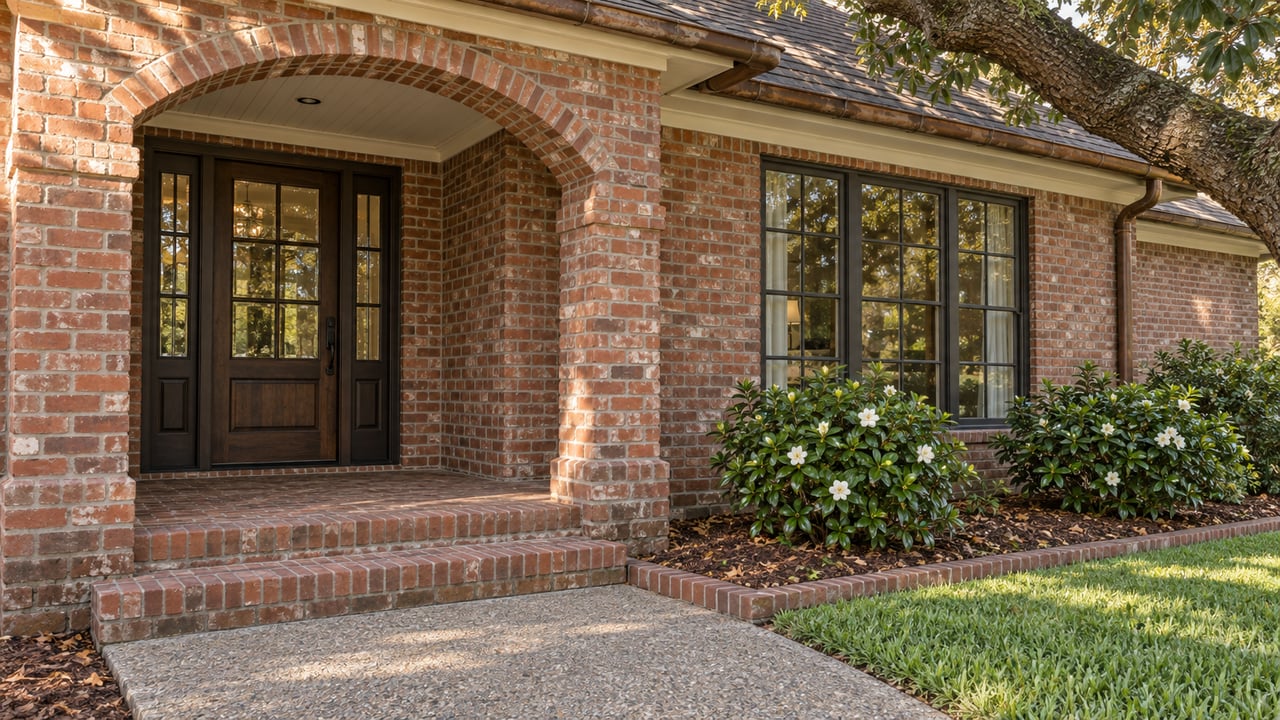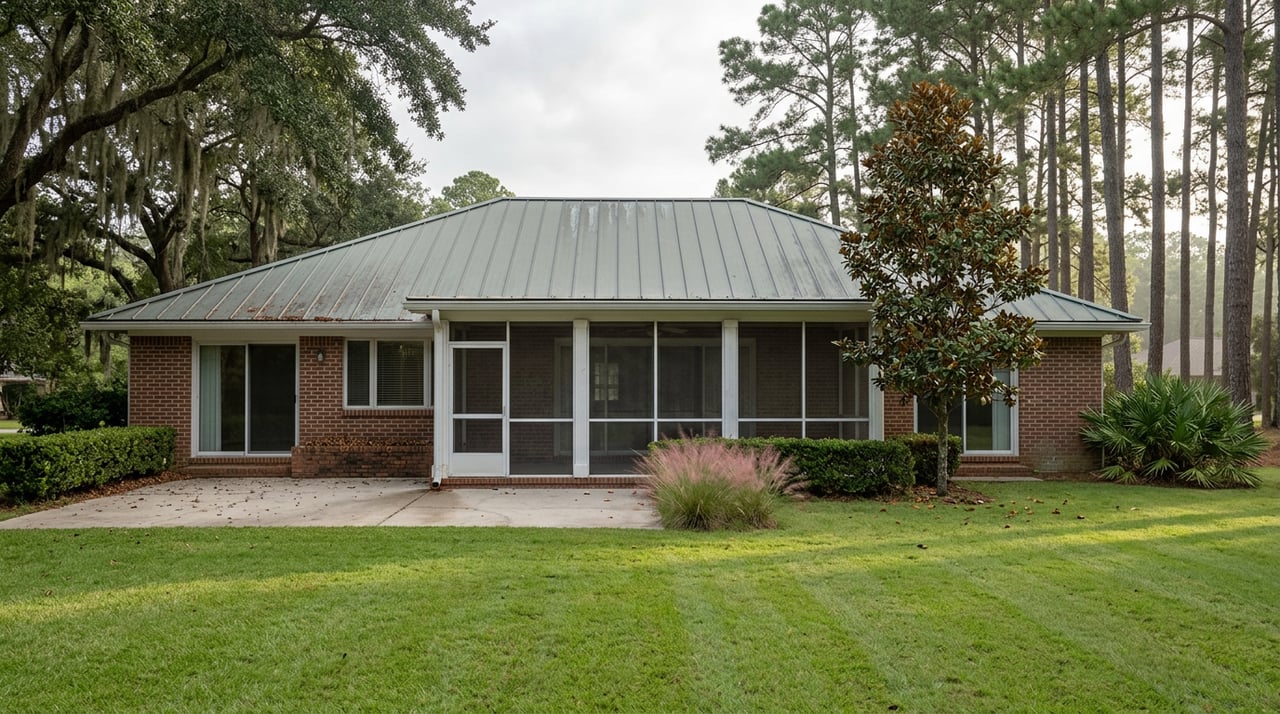
Two brick ranch homes sit three doors apart on the same cul-de-sac in Diamondhead. Same builder, same era, same view of the eighth fairway. One owner writes a check to the Property Owners Association every month. The other hasn't paid in years and faces no legal consequence for it. Both houses use the same roads, the same golf courses, the same security patrols. Only one owner is required to help pay for any of it.
That split isn't a rumor or a loophole someone found. It's the direct result of a decade-long fight over how Diamondhead's original 1970s covenants were written, and it means the tidy monthly assessment figure you'll see on a listing sheet, currently sitting at $62, is not a stable number. It's a legal question, and the answer depends on which phase of the development your specific lot belongs to.
Why the same community has different rules for different lots
Diamondhead started in 1970 as a private development built out in phases. Diamondhead Properties, Inc. platted each section separately, and each phase got its own Declaration of Restrictions, Conditions, Easements, Covenants, Agreements, Liens and Charges, the document that obligates a lot owner to pay POA dues in exchange for access to the community's amenities. Those covenants weren't written to last forever. They carry expiration dates, and because each phase was platted at a different time, those dates don't line up. According to Seacoast Echo, some covenants began lapsing in 2020. Others stay active and enforceable until as late as 2029.
When a phase's covenant expires, so does the legal mechanism that lets the POA compel payment from owners in that phase. That's not a POA policy choice. It's a Hancock County circuit court finding. A group of property owners called End Diamondhead Uncertainty sued the POA in 2021 after the association kept trying to collect dues and place liens on homes in expired-covenant areas. Circuit Judge Christopher Schmidt sided with the plaintiffs, ruling that a 2010 membership vote the POA had pointed to as extending the covenants didn't actually amend anything. His language on the underlying covenants was blunt:
They expired on their own terms.
The POA asked him to reconsider. He declined, and reaffirmed the ruling. Both the POA and the property owners who sued it have said publicly that a dispute this consequential will likely need a final word from the Mississippi Supreme Court before the covenant question is fully settled statewide. Until that happens, the pattern on the ground holds: once your lot's covenant lapses, you cannot be forced to pay, and the POA has no lien it can enforce against you for refusing.
A timeline worth knowing before you look at a single listing
| Year | What happened |
|---|---|
| 1970 | Diamondhead Properties, Inc. begins platting the community in phases, each with its own covenant document |
| 2012 | Diamondhead incorporates as a city; the POA keeps ownership of the golf courses, pools, and clubhouse because the city determined it couldn't absorb the maintenance cost without a significant tax increase |
| 2020 | The first covenant phases begin expiring on their original terms |
| 2021 | End Diamondhead Uncertainty files suit against the POA over dues collection and liens in expired-covenant areas |
| 2023 | Circuit Judge Christopher Schmidt rules the POA cannot compel dues once a covenant expires; the POA seeks reconsideration and is denied |
| 2024 | The POA raises monthly dues from $56 to $62, citing rising property tax exposure on the amenities it owns |
The city's 2012 decision matters more than it looks. When Diamondhead incorporated, its leaders looked at what it would cost to take over the golf courses, the marina, the pools, and the clubhouse dining spots like Latitude 30 Patio and Grill and The Oak Room, and concluded the tax increase required would be too steep. So the POA kept the amenities, and kept the job of funding them entirely through member dues. There's no municipal backstop if that funding model keeps eroding.
How covenant status can affect dues
That distinction is especially visible in amenities that are difficult to limit to dues-paying lots. A golf course, a walking trail, a marina, these aren't amenities you can fence off from non-paying neighbors the way a private pool with a keycard can be. If you own a home backing up to the Cardinal or Pine course and your covenant has expired, you may still have the course view and the option to use POA facilities as a walk-on guest, even if dues are not legally enforceable for your lot.
When a lot's covenant has expired, dues may no longer be enforceable for that owner; maintenance is funded by the members who pay dues. The POA board cited rising property tax exposure when it raised dues in 2024; it had not raised rates in six years. The number of enforceable payers varies, and the POA may face county property taxes on its land under the court's rulings. The dues-paying members fund the greens, lifeguard chairs and clubhouse lights.
If you're comparing Diamondhead to another Gulf Coast or Northshore community where HOA dues are a flat, contractually permanent obligation attached to every lot regardless of age, you're not comparing like to like. Diamondhead's dues structure is a moving target shaped by litigation outcomes and which decade your parcel was platted.
What this actually means when you're the one buying
The market gives you room to ask these questions before you commit. As of June 2026, the median sale price in Diamondhead sat at $269,853, up 5.9 percent from a year earlier, and homes were taking around 85 days to sell as of May 2026. That's not a market where you need to waive due diligence to win a bidding war. Use the time.
Before you write an offer on a Diamondhead property, get answers to these:
- Which platted phase does this specific lot fall under, and what is that phase's covenant expiration date?
- Has the current owner actually been paying POA dues, or is the parcel already sitting in an expired-covenant zone where payment was optional?
- If the covenant hasn't expired yet, how many years of enforceable dues remain before it does?
- Is the $62 monthly figure quoted to you a legally enforceable assessment on this lot, or a voluntary contribution the current owner happens to make?
The POA's administrative office, at 7610 Country Club Circle, can pull the covenant document tied to a specific address. That's a five-minute phone call that tells you more about your actual future obligation than anything a listing description will say.
A few questions worth answering plainly
Does every home in Diamondhead belong to the POA? No. Membership and the dues obligation that comes with it trace back to which covenant governs your lot and whether that covenant has expired. Some owners are bound by active covenants through 2029. Others sit in zones where the covenant already lapsed and dues are voluntary.
Could the golf courses or pools eventually close if fewer people pay? That's the open question the litigation hasn't settled. What's clear from the record is that the city chose not to take over the amenities in 2012 because of the tax cost, and the POA's board has already raised dues once, in 2024, citing rising financial pressure. Nothing in the current rulings guarantees a funding solution beyond what paying members contribute voluntarily.
Buying in a golf course community usually means checking a school district and a clubhouse fee schedule. Diamondhead asks you to check something most buyers never think to ask about: a decades-old land record and a court docket. That's not a reason to avoid the community. It's a reason to walk in with the actual paperwork in hand instead of an assumption borrowed from a different HOA somewhere else.
If you're weighing Diamondhead against another Northshore or Gulf Coast option and want a straight answer about what a specific lot actually owes, Gina Constantino has spent 24 years working transactions across these markets and can help you get the covenant history pulled before you're emotionally attached to a house. Let's Connect.
This article is general information, not legal, tax or financial advice. Consult a qualified professional about your situation.